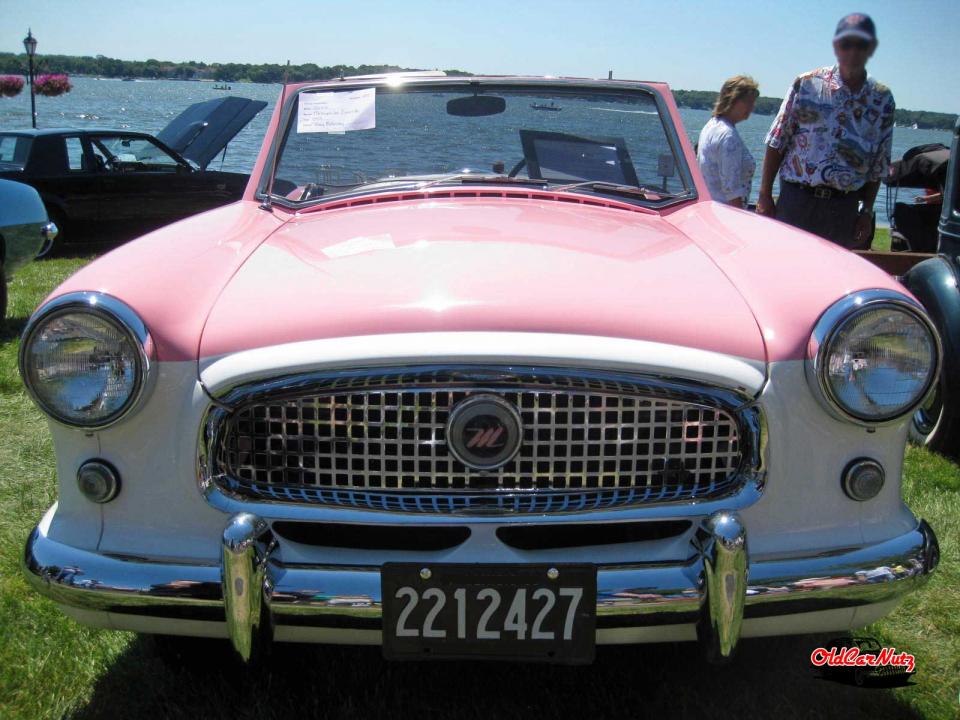
The 1959 Nash Metropolitan Convertible represents a peculiar moment in American automotive history when manufacturers experimented with compact European-influenced designs for domestic markets.
This diminutive two-door convertible emerged during an era dominated by chrome-laden behemoths, offering an alternative approach to personal transportation.
Its modest specifications and unconventional styling choices reflected shifting consumer attitudes, yet questions remain about whether this British-built vehicle truly understood its intended audience or simply occupied an uncertain middle ground between practicality and aspiration.
Engine Specifications and Power Output
The 1959 Nash Metropolitan Convertible utilized an inline four-cylinder engine from Austin Motor Company’s B-Series family, displacing 1490 cc (90.9 cubic inches).
This overhead valve engine featured a bore of 2.8 inches and stroke of 3.5 inches, with an 8.30:1 compression ratio.
Power output ranged from 47-50 horsepower at 4100-4250 RPM in standard configuration, while performance variants achieved 55-56 horsepower under SAE testing.
Torque delivery measured 74 lb-ft at 2100 RPM.
The front-mounted engine drove the rear wheels through a three-speed manual transmission with a column-mounted shifter, utilizing a single Zenith carburetor for fuel delivery. The vehicle’s compact dimensions included a wheelbase of 85.0 inches, contributing to its nimble urban driving characteristics.
Dimensions, Weight, and Physical Characteristics
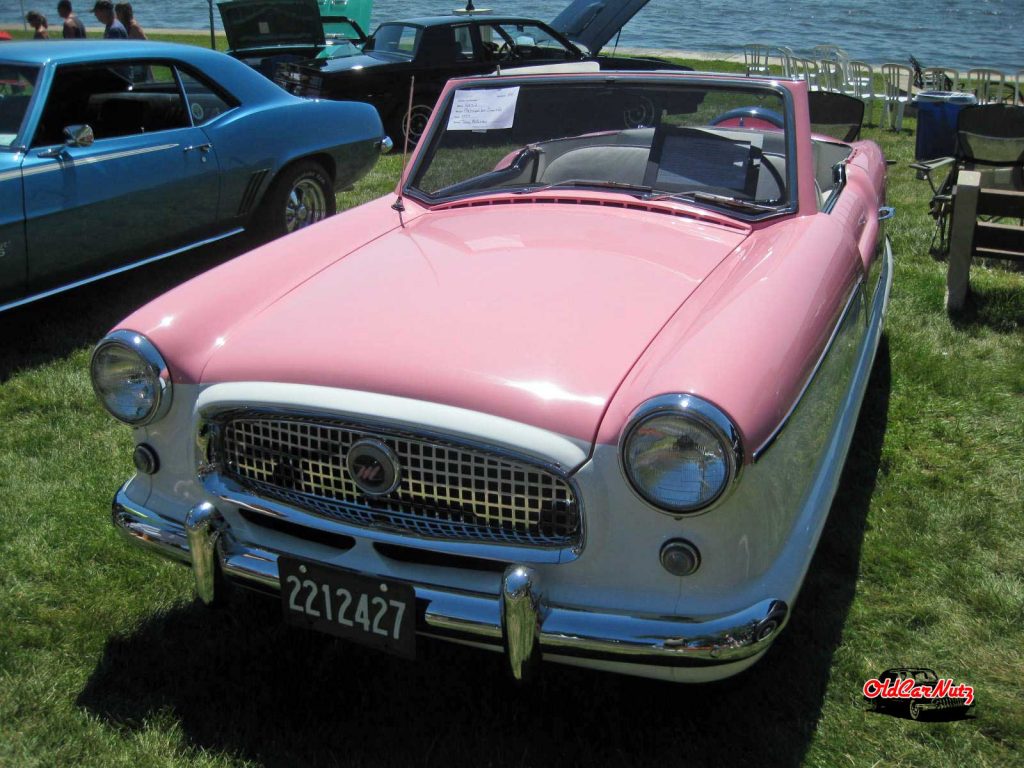
Measuring 149.5 inches in length, 61.5 inches in width, and 54.7 inches in height, the 1959 Nash Metropolitan Convertible occupied a remarkably compact footprint that distinguished it from conventional American automobiles of the period.
The 85.0-inch wheelbase created proportions with extended overhangs, while front and rear track measurements of 45.0 and 44.8 inches, respectively, provided stable handling characteristics. Unit-body construction contributed to a curb weight of approximately 1,850 pounds, considerably lighter than contemporary American vehicles.
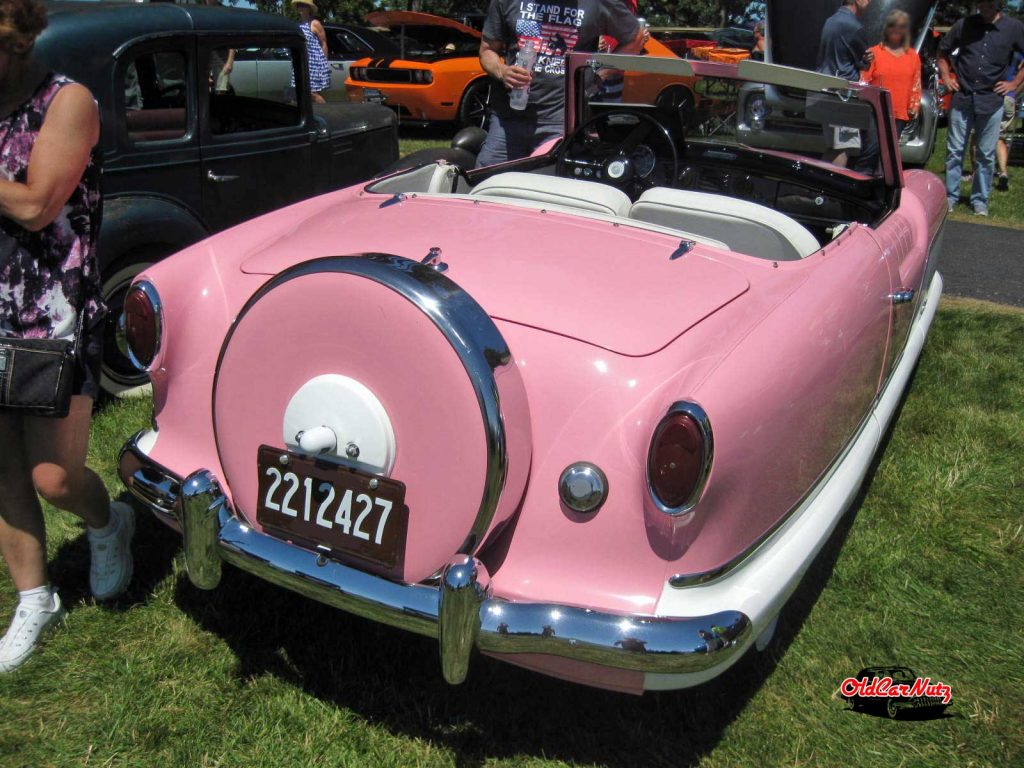
The two-door convertible configuration accommodated two occupants, with 6.4 inches of ground clearance completing the dimensional specifications that enhanced maneuverability in urban environments. Despite being designed in America, the Metropolitan was assembled at the Austin factory in England before being shipped back to the United States for sale.
Series IV Design Updates and Manufacturing Details

Significant engineering and design refinements characterized the Series IV Nash Metropolitan, which commenced production on January 12, 1959, beginning with VIN E59048.
The most notable mechanical improvement was the increase of the compression ratio from 7.2:1 to 8.3:1, boosting the power output to 55 bhp from the 1490 cc inline-4 engine.
Exterior modifications included an external decklid, one-piece rear window, and standard vent windows, adding 15 pounds to vehicle weight.
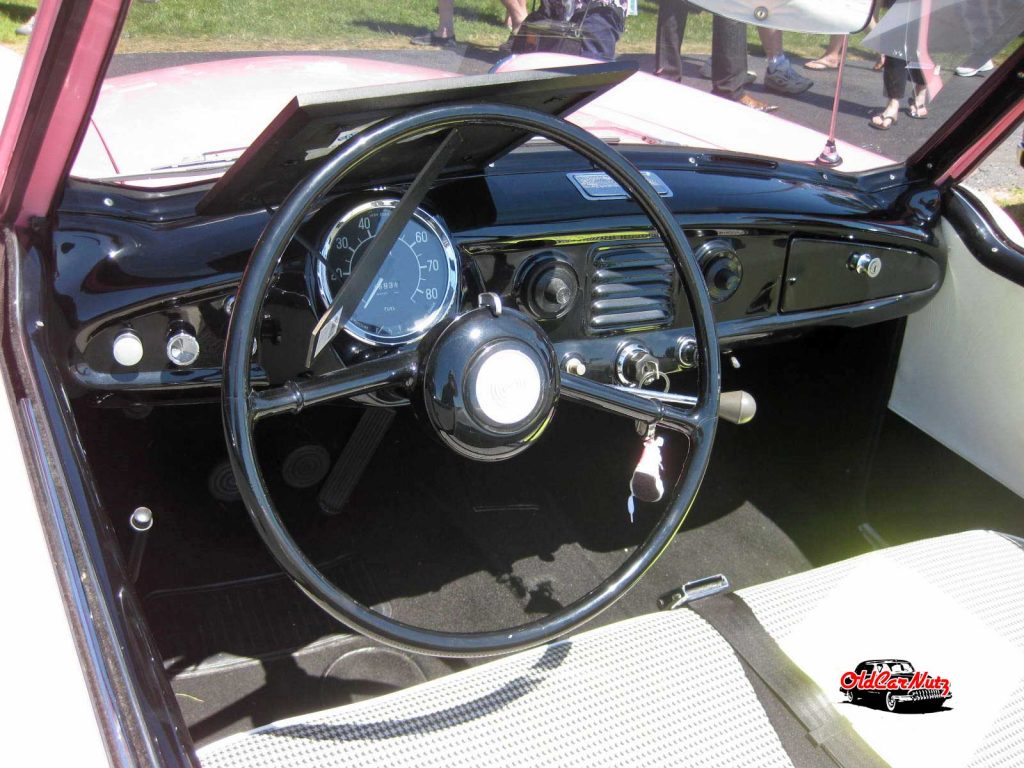
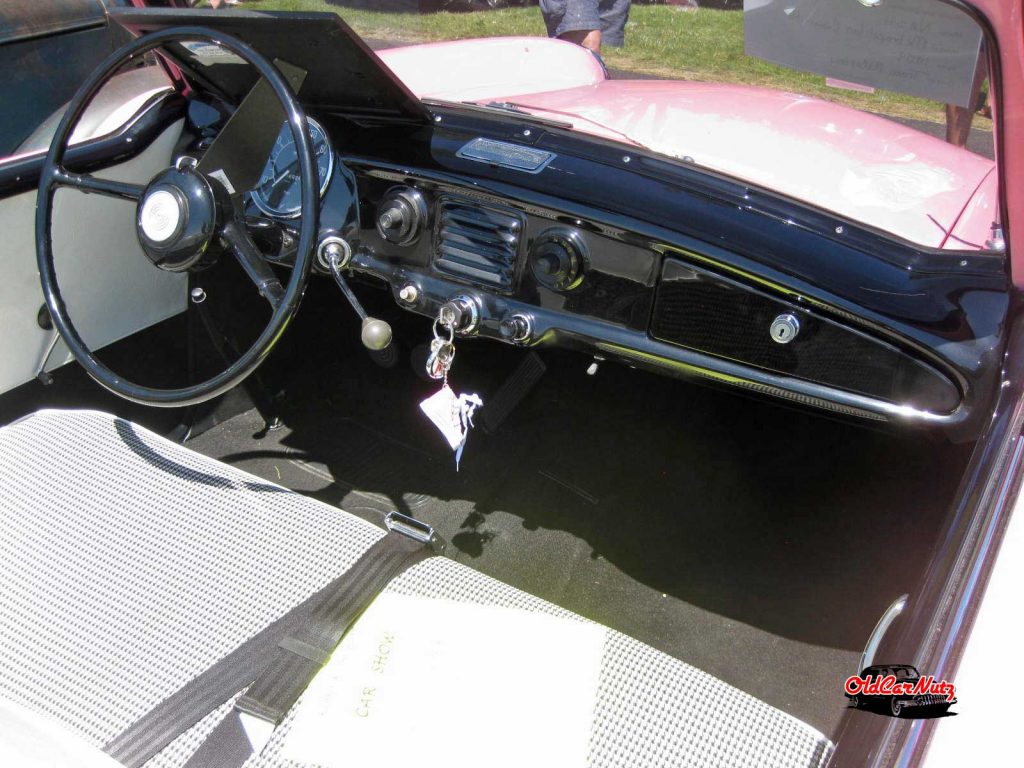
Interior enhancements featured diamond pattern seats with white vinyl trim, factory-installed heater and radio, and Smiths instruments. The Series IV was priced at $1,672.60 for the hardtop and $1,696.80 for the convertible model.
Production concluded April 19, 1961, with VIN E95981 at Austin’s English facility.
Market Positioning and Development History
Nash president George Mason conceived the Metropolitan as his brainchild for the postwar automotive market, positioning it as a “personal use” vehicle targeting specific consumer segments rather than general transportation.
Mason strategically responded to anticipated demand for smaller, economical vehicles in post-war America, combining American design philosophy with overseas manufacturing at Austin’s Longbridge factory to reduce production costs.
The Metropolitan entered the market in 1954, pioneering Nash’s compact car segment ahead of domestic competition.
Marketed specifically as a second car for women running errands and transporting children, it offered consumers a smaller alternative to the era’s excessively large automobiles like the Cadillac Eldorado. The vehicle carried an original MSRP of $1,696.80, making it an accessible option for budget-conscious buyers.
Road Performance and Driving Dynamics

Beyond its strategic market positioning as an economical second car, the Metropolitan’s actual road performance revealed a modest but practical urban-oriented capability.
The 1490cc inline-4 engine delivered 50 BHP at 4250 RPM, generating 74 lbs/ft torque at 2100 RPM. While adequately suited for city driving, road tests identified notable shortcomings:
- Steering exhibited decidedly vague feedback with an imprecise directional response
- Pronounced understeer behavior emerged during cornering maneuvers
- Braking performance was rated as adequate, but reflected 1950s technology limitations
- Road-holding characteristics are deemed adequately good for the intended purpose
- 60 mph cruising capability proved reasonable for highway travel
The 1850 lb curb weight contributed to acceptable stopping distances despite modest power output. The vehicle featured luxury accessories, including a map light and electric wipers that enhanced the driving experience beyond basic transportation expectations.
References
- https://www.conceptcarz.com/s9281/nash-metropolitan.aspx
- https://www.audrainautomuseum.org/1959-nash-metropolitan-convertible-boost-badge
- https://www.audrainautomuseum.org/classic-fantastic/1959-nash-convertible-metropolitan
- https://uflicker.tripod.com
- https://en.wikipedia.org/wiki/Nash_Metropolitan
- https://www.automobile-catalog.com/make/metropolitan/metropolitan/metropolitan_convertible/1959.html
- https://www.beverlyhillscarclub.com/1959-nash-metropolitan-c-16464.htm
- https://roarington.com/media-house/directories/cars/nash_metropolitan_convertible_1959
- https://www.automobile-catalog.com/make/metropolitan/metropolitan/metropolitan_hardtop/1959.html
- https://www.automobile-catalog.com/car/1959/2057030/nash_metropolitan_1500_convertible_series_iii.html
- https://www.allpar.com/d3/cars/adopted/nash-metropolitan.html
- https://www.automobile-catalog.com/car/1959/2057060/metropolitan_1500_convertible_series_iv.html
- https://www.classic.com/m/nash/metropolitan/series-iv/
- https://frankscarsinthehood.com/1959-nash-metropolitan/
- https://www.classicdigest.com/cars/nash/metropolitan/112527
- https://www.classicdriver.com/en/car/nash/metropolitan/1959/167108
- https://www.hagerty.com/valuation-tools/metropolitan/1500/1959/1959-metropolitan-1500-series_iv
- https://www.classic.com/m/nash/metropolitan/year-1959/
- https://www.classic.com/m/nash/metropolitan/year-1959/?page=3
- https://accidentallywesanderson.com/places/59-nash-metropolitan/